Facts don't care about feelings. Science isn't concerned about sensibilities. And reality couldn't care less about rage.

Buy the Book Learn More
Uncomfortable Ideas

About Uncomfortable Ideas

This is a book about uncomfortable ideas—the reasons we avoid them, the reasons we shouldn’t, and a discussion of dozens of examples that might infuriate you, offend you, or at least make you uncomfortable.


Many of our ideas about the world are based more on feelings than facts, sensibilities than science, and rage than reality. We gravitate toward ideas that make us feel comfortable in areas such as religion, politics, philosophy, social justice, love and sex, humanity, and morality. We avoid ideas that make us feel uncomfortable. This avoidance is a largely unconscious process that affects our judgment and gets in the way of our ability to reach rational and reasonable conclusions. By understanding how our mind works in this area, we can start embracing uncomfortable ideas and be better informed, be more understanding of others, and make better decisions in all areas of life.

ISBN (ebook): 9781456627669 / ISBN (print): 9781456631857 / Published by: Archieboy Holdings, LLC. / Published: 2016-11-04

Get Uncomfortable Ideas

Available now — order your copy today.

Order Now

Where to Buy

What Readers Are Saying

Brilliant! Very eye opening. Making us question the things that make them uncomfortable and why is what we all need. Love it!
All around nice read. Loved the flow and the comedy was great. Really like the different perspectives offered.
A bumpy ride indeed. Whether one agrees or disagrees with the content, it still manages to make one think critically about certain things, and that is always a good thing. What's more, it is being presented in a non-threatening, clear, balanced, and objective way. A great way to tackle uncomfortable ideas.

About Bo Bennett, PhD

Bo Bennett, PhD
Visit Author Page →

Business.


Robert "Bo" Bennett started "Adgrafix", a graphic design firm, right after graduating Bryant University in 1994, with a bachelor's degree in marketing. In 1995, he sold the graphic design business but kept the name "Adgrafix" that he used for his new web hosting company. As a self-taught programmer, Bo created one of the first (perhaps the first) web-based affiliate systems and web-based web hosting interfaces. He built Adgrafix to a 5 million dollar a year business, then sold it to Allegiance Telecom in 2001.

A day after he sold Adgrafix, Bo started Archieboy Holdings, LLC as a holding company for many different web properties, some of which have become their own entities, and sold to new owners, and others which he is still running today. One of the past sales includes Boston Datacenters -- the distressed datacenter in Charlestown, MA purchased by Bo from former HarvardNet founder. He took the company from losing tens of thousands of dollars per month to profitability in less than a year. In two years time, he sold the property to Hosted Solutions. Today, the property is owned by Windstream, and it remains one of the premier datacenters in New England.

Bo is currently the founder and CEO of eBookIt.com, a company that formats and distributes eBooks, print on demand, and digital audio books, as well as president of Archieboy Holdings.


Success / Motivation.


By age 10, Robert "Bo" Bennett started listening to and reading personal development tapes and books. Over the years, he has developed a science-based approach to success that differs quite a bit from the over-hyped success guru's approaches commonly seen today. Before beginning his lifelong quest to shape the lives of others, he had to prove to himself that his theories, beliefs, and convictions worked.

At age 10, Bo started in business by creating and selling wooden key racks in his father's workshop. Since then, he has started several companies and sold them anywhere from $1 to $20,000,000.00.

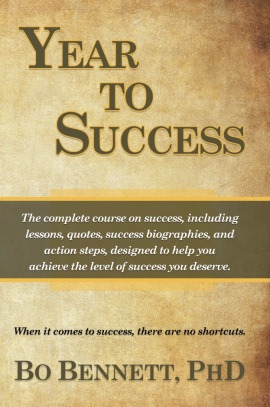
After selling his first company of significant value, Bo began writing Year To Success, the most comprehensive book ever written on success, based on his experiences, thoughts, and timeless success principles.


Psychology.


Bo's interest in psychology began as an undergraduate studying marketing, specifically, consumer behavior.  After many years immersed in the business world, Bo returned to school and received his master's degree in general psychology.  He continued to the PhD program in social psychology, focusing on social, cognitive, and positive psychology.

Bo is the administrator of Socially Psyched, a comprehensive collection of social/cognitive psychology experiments, studies, demonstrations, biases, and systematic reviews, presented in an entertaining way while adhering to academic standards.  As part of this effort, Bo creates videos that can be found on his YouTube channel.


Science, Critical Thinking, and Secularism.


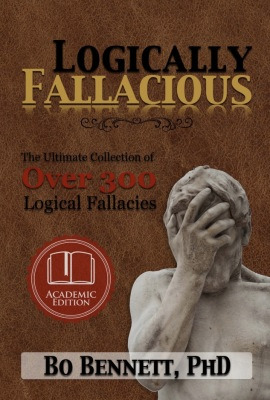
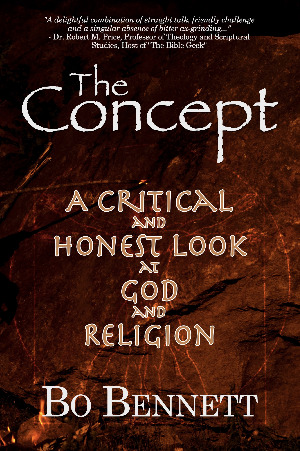
Bo's personal motto is "Expose an irrational belief, keep a person rational for a day. Expose irrational thinking, keep a person rational for a lifetime."  Much of his charitable work is in the area of education—not teaching people what to think, but how to think.  His projects include his book, The Concept: A Critical and Honest Look at God and Religion, and Logically Fallacious, the most comprehensive collection of logical fallacies. His secular (humanistic) philosophy is detailed at PositiveHumanism.com.

From March of 2014 until February of 2016, Bo was the producer and host of The Humanist Hour, the official broadcast of the American Humanist Association, where he could be heard weekly discussing a variety of humanistic issues, mostly related to science, psychology, philosophy, and critical thinking.


Academia / Education.


Bo's pro bono work focuses on education.  He developed and taught a public speaking and debate course for Student Athletes Rising, a non-profit youth development organization offering guidance and training for America’s youth, ages 7-19, preparing them for enriching college experiences and productive lives as future leaders of their communities.  As a PhD student, Bo spent time as a graduate assistant for Walden University, tutoring masters and other PhD students in research methodology.  His dissertation was on social intelligence development in both traditional and distance learning programs.

Bo has developed several online courses and the learning platform on which they run—as well as teaches those courses.  These courses can be found in the "online courses" link on the main menu. Bo is currently an adjunct professor at Lasell College teaching introduction to psychology and social psychology.


Toastmasters.


Bo joined Toastmasters in 2003, after a painfully embarrassing speech given to a room full of his contractors. Desperate to improve his speaking skills in the least time possible, he devoted full-time to being a Toastmaster and completed all 40 speeches in a record six months. He served the required leadership roles to achieve his Distinguished Toastmaster Award (DTM) in record time of just over one year.

In 2004, Bo created the FreeToastHost website hosting platform for all Toastmasters clubs. Today, FreeToastHost hosts over 10,000 clubs -- around the world.

In 2008, Bo started the Toastmasters Podcast, which began as a district podcast, then in 2010 transferred ownership to Toastmasters International, to become the organization's first official podcast. Although Bo no longer hosts the podcast, the podcast is still going strong and serves as the voice to over a quarter of a million members worldwide.


Personal Life.


Bo was born in Connecticut where he lived until he was 21. He attended Bryant University where he paid his own way through by running a promotional business while also serving as a Resident Assistant.

At age 13, Bo started studying the martial arts. By Age 18, he earned his first-degree black belt in Shaolin Kempo Karate. Since his first black belt, he has also earned a second-degree black belt in Tae-Kwon-Do and continues to study several different styles.  He is also passionate about health and fitness.

Right after graduating with a Bachelor's degree in Marketing, Bo moved to Boulder, Colorado where after just five months, realized the "Rocky Mountain High" wasn't for him. Missing his family, he moved back to Connecticut.

In 1994, Bo met his wife-to-be, Kim, at the bar "Archie Moore's" -- which is where they got the name for their first dog, Archie, which is where he got the name for his business. Bo and Kim moved to Boston, Massachusetts shortly after they met, got married, and been living in the Boston area happily ever since, with their two children.


Public Speaking / Interview Availability.


Bo is available for interviews and speaking engagements on a number of topics.  The general topics include:


  •     Business
  •     Science Education
  •     Success
  •     Entrepreneurship
  •     Motivation
  •     General Psychology
  •     Social Psychology
  •     Positive Psychology (well-being, flourishing, happiness, etc.)
  •     Cognitive Psychology (belief, cognitive biases, memory, our flawed brain, etc.)
  •     Social Science (scientific method, what is / is not science, etc.)
  •     Critical Thinking
  •     Skepticism
  •     Logical Fallacies
  •     Humanism / Secularism
  •     Atheism Research
  •     Toastmasters / Public Speaking

Some samples of his presentations and interviews are lined under the "Media" section of each book, with presentations/interviews specific to the topics of the books.

Frequently Asked Questions

Certainly not. There are an unlimited number of ideas and each of us have limited time. There are ideas that don't interest us in the least bit, those of little significance, those we can do nothing about, those we have already entertained, and ideas that are irrelevant due to other ideas previously thoroughly considered. For example, I am not "open" to entertaining ideas about a flat earth because the ideas rejects scientific facts and is extremely unlikely of being true. If someone really believes that they have a "smoking gun" argument to prove that the earth is flat, then present it to geologists, cosmologists, physicists, astronomers, or some other experts in that area who can evaluate the idea properly. Once the idea has been properly vetted and it has support outside a lunatic fringe, I will entertain it.

Frustration, mostly. I have been noticing more and more instances of extremism from the group with which I most identify: left-leaning, humanists who are concerned about social issues. I have seen people argue that all sex is rape, Ellen DeGeneres is a racist because she had herself photo shopped getting a piggy back ride on Usain Bolt, and witnessed an autistic student being brought to tears by a hostile "skeptical" audience who labeled him as a racist for doing his job at a student journalist. I feel increasingly disconnected with this group where these extreme positions have become normalized due to the echo-chambers in which communication takes place. Our actions and views result in opposite action and views. Is the extreme left a reaction to the extreme right, or vice versa? It doesn't matter. Extremism is harmful in all its forms. By critically examining ideas through a scientific, not an ideological lens, we can arrive at reason.

Human behavior becomes increasingly difficult to predict the further we look in the future and the more variables we add in the equation. Without knowing how to think, maybe some people really are better off just being told what to think.

Remember ABC—awareness, believability, and comprehension. We need to be made aware of the evidence—not some inaccurate version of the evidence presented in such a way so any reasonable person would dismiss it, but the facts presented in an unbiased way. Believability in this context refers to knowing what level of trust one should have in the source as well as knowing what constitutes evidence and how to tell the difference between strong and weak evidence. As for comprehension, the more you generally understand, the better your conclusion.

We can sum up all the reasons why we avoid uncomfortable ideas with the phenomenon known as motivated reasoning. This describes how emotionally-charged ideas undergo a qualitatively distinct reasoning process that favors feelings over facts, which results in inaccurate conclusions and poor decisions.

There is a common misconception that we need to choose between happiness and some of the more “depressing” aspects of reality that are commonly seen as uncomfortable ideas. While I can think of a few cases where this might be the case, humanity is far more resilient than we give ourselves credit for. A landmark study published in 1978 demonstrated that lottery winners are no happier and paralyzed accident victims are no less happy a few months after their life-changing events. In addition, the lottery winners were often less happy than they were prior to winning the lottery because they took less pleasure in mundane events. Unlike being paralyzed, accepting uncomfortable ideas can be relatively benign such as realizing you’re not as good looking as you think. Just because an idea is uncomfortable at first, does not mean it will remain uncomfortable.


  • Expose Dangerous Thinking: When we put restrictions on the expression of ideas, we make it more difficult to identify potentially dangerous people and their dangerous ideas.

  • Attempting to Solve the Wrong Problem: If we don’t entertain the alternative ideas, even if they go against our ideology, personal experience, or anecdotal evidence, we can be wasting our time on solving the wrong problem.

  • Treating Symptoms and Not the Disease: When it comes to social issues, our desire to avoid uncomfortable ideas can cause us to focus on the symptoms while ignoring the disease.

  • Understanding Unintended Consequences: When we get caught up in ideology and political correctness, we overlook the downside of our actions.

  • Understanding Reduces Animosity: If we want to understand why someone holds the idea they do, we need to entertain the idea. What we often realize is that biological differences, different life experiences, or different values account for these different ideas.

  • Avoiding Manipulation: The less aware we are of the flaws in alternative ideas, the easier it is to be manipulated by them.

  • The Importance of a Shared Reality: Reality is founded on reason, logic, evidence, and experience. But this system breaks down when reason, logic, facts, and evidence are discarded, and experiences are interpreted in heavily biased ways.

We avoid uncomfortable ideas in three main ways: we avoid entertaining them, avoid accepting them, and avoid expressing them. These processes can be deliberate or done subconsciously or have components of both. Many of the same reasons we avoid entertaining uncomfortable ideas apply to why we avoid accepting and expressing these ideas. Refusing to entertain an uncomfortable idea is a conscious decision not to think about, investigate, or consider evidence for the idea. There are dozens of reasons why we do this. Many times there are multiple reasons combined that cannot be articulated, but we just “know” that an idea is not up for debate or consideration. The problem is, virtually all of these reasons are irrational; based on biases, cognitive effects, heuristics, fallacies; or other obstacles in reason.

Simply defined, an uncomfortable idea is an idea that makes you uncomfortable. This is a subjective concept meaning that any given idea can be uncomfortable to you but not to another person or vice versa. More specifically, an uncomfortable idea is a thought that is difficult to entertain due to real or anticipated psychological pain or social consequences that result from entertaining the thought.

Political correctness is defined as “the avoidance, often considered as taken to extremes, of forms of expression or action that are perceived to exclude, marginalize, or insult groups of people who are socially disadvantaged or discriminated against.” Think of social behavior on a continuum. At one end, we have overtly racist, sexist, and mean-spirited forms of expression or action directed towards those who are incapable of defending themselves due to lack of power. On the other end of the continuum, we have any form of expression or action that is interpreted as overtly racist, sexist, and mean-spirited. Political correctness exists between the two extremes.

Intelligent people are not immune to biases. Social scientist Keith Stanovich has done extensive research in the area of reasoning and proposed that one’s ability to reason effectively, that is to recognize and avoid biases largely responsible for our avoidance of uncomfortable ideas, is a separate intelligence just like emotional intelligence differs from general intelligence. Rational intelligence is an intelligence that is learnable.

A cognitive bias is like an illusion for the mind. It is a deviation from rationality in judgment. Our brain did not evolve with rationality and reason as a goal; the only goals are reproduction and survival. Rationality is only needed to the extent that it supports one or both of those goals. Here’s the big problem: evolution works over tens of thousands of years, and we have made dramatic changes to our social environment in the last several hundred years. Evolution hasn’t had time to catch up. An example to which most us can relate, unfortunately, is overeating. We have a desire to overeat because food was scarce in our ancestral environment and the cost of starving was far greater then the cost of eating too much. Today, for most of us, there is no shortage of food, and we have a serious problem with obesity. The evolutionary trait that once aided in our survival is now killing us. Like the behavior of overeating, most cognitive biases are also relics of our ancestral environment that once helped us survive, but now, in the age of reason, are problematic.

Other Books by Bo Bennett, PhD

Contact Bo Bennett, PhD