Business.
Robert "Bo" Bennett started "Adgrafix", a graphic design firm, right after graduating Bryant University in 1994, with a bachelor's degree in marketing. In 1995, he sold the graphic design business but kept the name "Adgrafix" that he used for his new web hosting company. As a self-taught programmer, Bo created one of the first (perhaps the first) web-based affiliate systems and web-based web hosting interfaces. He built Adgrafix to a 5 million dollar a year business, then sold it to Allegiance Telecom in 2001.
A day after he sold Adgrafix, Bo started Archieboy Holdings, LLC as a holding company for many different web properties, some of which have become their own entities, and sold to new owners, and others which he is still running today. One of the past sales includes Boston Datacenters -- the distressed datacenter in Charlestown, MA purchased by Bo from former HarvardNet founder. He took the company from losing tens of thousands of dollars per month to profitability in less than a year. In two years time, he sold the property to Hosted Solutions. Today, the property is owned by Windstream, and it remains one of the premier datacenters in New England.
Bo is currently the founder and CEO of eBookIt.com, a company that formats and distributes eBooks, print on demand, and digital audio books, as well as president of Archieboy Holdings.
Success / Motivation.
By age 10, Robert "Bo" Bennett started listening to and reading personal development tapes and books. Over the years, he has developed a science-based approach to success that differs quite a bit from the over-hyped success guru's approaches commonly seen today. Before beginning his lifelong quest to shape the lives of others, he had to prove to himself that his theories, beliefs, and convictions worked.
At age 10, Bo started in business by creating and selling wooden key racks in his father's workshop. Since then, he has started several companies and sold them anywhere from $1 to $20,000,000.00.
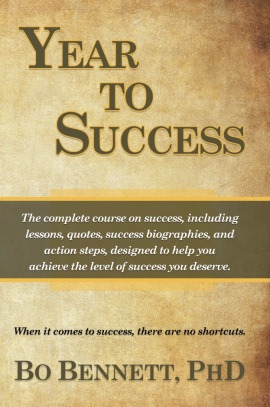
After selling his first company of significant value, Bo began writing Year To Success, the most comprehensive book ever written on success, based on his experiences, thoughts, and timeless success principles.
Psychology.
Bo's interest in psychology began as an undergraduate studying marketing, specifically, consumer behavior. After many years immersed in the business world, Bo returned to school and received his master's degree in general psychology. He continued to the PhD program in social psychology, focusing on social, cognitive, and positive psychology.
Bo is the administrator of Socially Psyched, a comprehensive collection of social/cognitive psychology experiments, studies, demonstrations, biases, and systematic reviews, presented in an entertaining way while adhering to academic standards. As part of this effort, Bo creates videos that can be found on his YouTube channel.
Science, Critical Thinking, and Secularism.
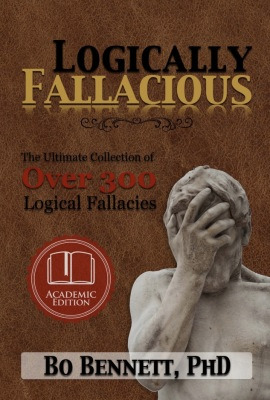
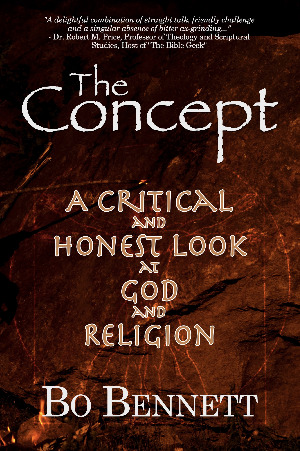
Bo's personal motto is "Expose an irrational belief, keep a person rational for a day. Expose irrational thinking, keep a person rational for a lifetime." Much of his charitable work is in the area of education—not teaching people what to think, but how to think. His projects include his book, The Concept: A Critical and Honest Look at God and Religion, and Logically Fallacious, the most comprehensive collection of logical fallacies. His secular (humanistic) philosophy is detailed at PositiveHumanism.com.
From March of 2014 until February of 2016, Bo was the producer and host of The Humanist Hour, the official broadcast of the American Humanist Association, where he could be heard weekly discussing a variety of humanistic issues, mostly related to science, psychology, philosophy, and critical thinking.
Academia / Education.
Bo's pro bono work focuses on education. He developed and taught a public speaking and debate course for Student Athletes Rising, a non-profit youth development organization offering guidance and training for America’s youth, ages 7-19, preparing them for enriching college experiences and productive lives as future leaders of their communities. As a PhD student, Bo spent time as a graduate assistant for Walden University, tutoring masters and other PhD students in research methodology. His dissertation was on social intelligence development in both traditional and distance learning programs.
Bo has developed several online courses and the learning platform on which they run—as well as teaches those courses. These courses can be found in the "online courses" link on the main menu. Bo is currently an adjunct professor at Lasell College teaching introduction to psychology and social psychology.
Toastmasters.
Bo joined Toastmasters in 2003, after a painfully embarrassing speech given to a room full of his contractors. Desperate to improve his speaking skills in the least time possible, he devoted full-time to being a Toastmaster and completed all 40 speeches in a record six months. He served the required leadership roles to achieve his Distinguished Toastmaster Award (DTM) in record time of just over one year.
In 2004, Bo created the FreeToastHost website hosting platform for all Toastmasters clubs. Today, FreeToastHost hosts over 10,000 clubs -- around the world.
In 2008, Bo started the Toastmasters Podcast, which began as a district podcast, then in 2010 transferred ownership to Toastmasters International, to become the organization's first official podcast. Although Bo no longer hosts the podcast, the podcast is still going strong and serves as the voice to over a quarter of a million members worldwide.
Personal Life.
Bo was born in Connecticut where he lived until he was 21. He attended Bryant University where he paid his own way through by running a promotional business while also serving as a Resident Assistant.
At age 13, Bo started studying the martial arts. By Age 18, he earned his first-degree black belt in Shaolin Kempo Karate. Since his first black belt, he has also earned a second-degree black belt in Tae-Kwon-Do and continues to study several different styles. He is also passionate about health and fitness.
Right after graduating with a Bachelor's degree in Marketing, Bo moved to Boulder, Colorado where after just five months, realized the "Rocky Mountain High" wasn't for him. Missing his family, he moved back to Connecticut.
In 1994, Bo met his wife-to-be, Kim, at the bar "Archie Moore's" -- which is where they got the name for their first dog, Archie, which is where he got the name for his business. Bo and Kim moved to Boston, Massachusetts shortly after they met, got married, and been living in the Boston area happily ever since, with their two children.
Public Speaking / Interview Availability.
Bo is available for interviews and speaking engagements on a number of topics. The general topics include:
- Business
- Science Education
- Success
- Entrepreneurship
- Motivation
- General Psychology
- Social Psychology
- Positive Psychology (well-being, flourishing, happiness, etc.)
- Cognitive Psychology (belief, cognitive biases, memory, our flawed brain, etc.)
- Social Science (scientific method, what is / is not science, etc.)
- Critical Thinking
- Skepticism
- Logical Fallacies
- Humanism / Secularism
- Atheism Research
- Toastmasters / Public Speaking
Some samples of his presentations and interviews are lined under the "Media" section of each book, with presentations/interviews specific to the topics of the books.